
Response Screening Guide
DOCX download
Response Screening Guide
Free editable Word guide you can copy, fill in, and share with your band. Also readable on this page.
How to use this guide
Guide for screening responses to audition posts. Each reply gets scored the same way until a shortlist of invitees is left standing.
Suggested workflow: print one scoresheet per candidate, rate proof, schedule fit, and tone as replies land, and start a fresh stack whenever a new opening is posted.
When replies flood in, the job is not to be polite to everyone forever. The job is to protect rehearsal time for people who meet the bar and communicate like adults.
One-pass rejects
Some replies fail on arrival: the applicant lives ninety minutes away from your practice space, ignores the requested video link, writes with open hostility, or clearly cannot make Tuesday nights. Answer those with a one-sentence polite no within a day, because a clean rejection is scene karma and bulk silence still stings.
The expensive mistake is inviting a weak applicant to audition out of politeness, which spends your limited evening slots and delays the candidates who actually cleared the bar. Niceness without a filter quietly taxes the people who followed your instructions and are waiting on a date.
Score the shortlist
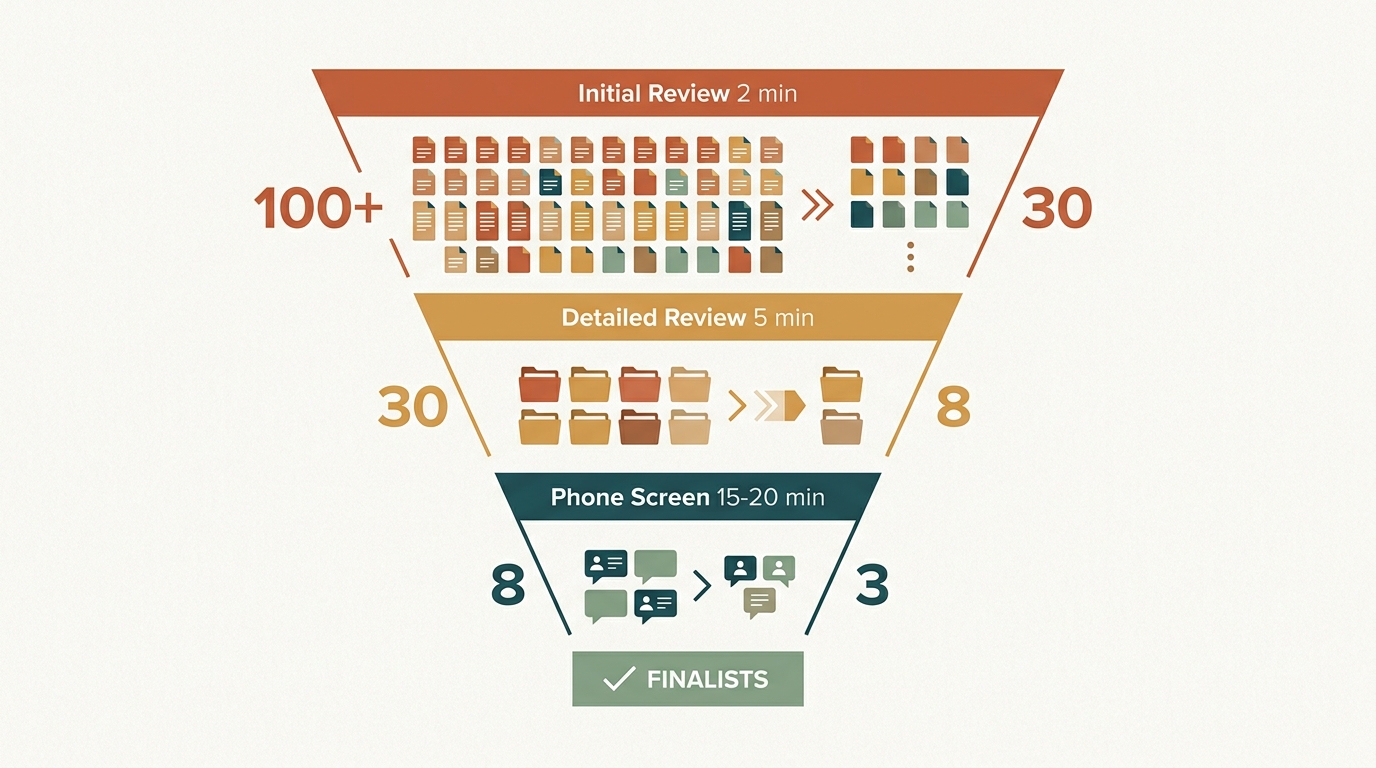
Give every surviving applicant four quick ratings from one to five: how well they write, how convincing their playing clips are, whether their free evenings match yours, and how they come across. Only the top tier, usually three to six people for one serious seat, earns an audition slot.
Dragging twenty mediocre possibilities through your practice room is how bands exhaust themselves and hire nobody. When nobody clears the bar after two rounds, the fix is a sharper ad with real audio requirements and stated commitment levels, not a quiet slide of your standards under deadline panic.
Speed is reputation
Reply to every serious applicant inside three or four days, because the best players in any local scene are usually weighing two other projects at the same time. A band that answers in a week reads as organized; one that surfaces after a month reads as a warning.
Consistency matters as much as velocity, so run applications through a shared inbox or one tracking sheet rather than the bandleader’s personal messages. Otherwise a single vacation or busy week at work ghosts half your pipeline, and word travels fast in a scene where everyone has played with everyone.
Fill-in: Screening scoresheet
Candidate: ________
Proof quality (1–5): ________
Schedule fit (1–5): ________
Tone (1–5): ________
Invite? Y/N: ________
Putting it into practice
Build a shortlist this week and schedule structured auditions only for that list.
Score cold replies and active musician profiles on the same sheet so a polished listing cannot skip proof-of-fit just because it looks complete.
FAQ
How fast should we screen replies?
Within a few days. Slow ghosting loses the good candidates and trains the scene that you are chaotic.
What is a one-pass reject?
Missing city/commitment, no media proof when requested, hostile tone, or ignoring the application instructions you published.
Should we send personal rejects?
A short polite no for people who invested effort is scene karma. Bulk silence is common and still feels bad.
How many people make the audition shortlist?
Usually three to six for a serious seat. More than that means your filter is too weak.