
Vision Statement Template
DOCX download
Vision Statement Template
Short fill-in for audience, lane, ambition, and non-negotiables. Also readable on this page.
DOCX download
Core Vision Worksheet
Deeper session worksheet for shared yeses, open tensions, and operational implications.
How to use this guide
Template for creating a band vision statement. Aim to end the session with a four-sentence statement every member can recite from memory. When the band needs a fuller workshop—before a hire, brand pivot, or after a lineup change—use the core vision worksheet download and the facilitation section below.
Draft answers alone, merge them into one paragraph during a band meeting, and file it with the booking one-sheet; dust it off yearly or when a founder exits.
If nobody can say what the project is for, recruiting and booking become random acts of hope.
Short enough to remember
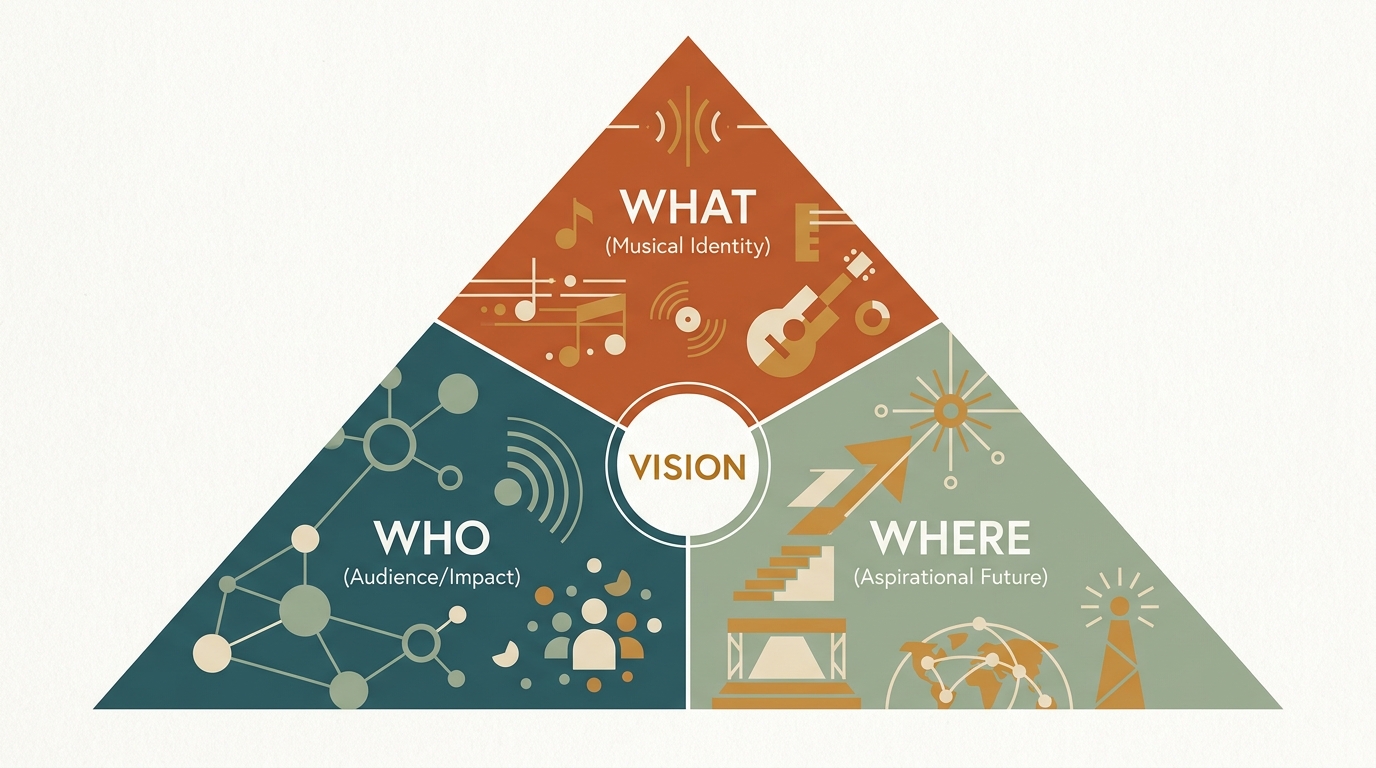
Four sentences should carry the whole thing: who the music serves, what corner of the musical map the band occupies, how far everyone wants to take it, and which lifestyle limits are not up for negotiation. Anything longer becomes a poster nobody reads after the framing party.
The honest exam happens at the next rehearsal: each player says the idea back from memory, in their own words, without peeking at the shared note. Where versions diverge, the wording is ambiguous or the band never truly agreed, and both discoveries are worth having early.
Facilitate a core vision session when stakes are high
Block a focused two hours after everyone completes thirty to forty-five minutes of solo reflection, because rushing the purpose-and-values portion produces a slogan nobody ever consults afterward. Bring one document, a timer, and the same seriousness the band would bring to a paid studio booking.
Round-robin the responses so each member speaks before anyone rebuts, since monologues from the loudest founder make the rest of the lineup quietly check out. Disagreement surfacing here means the exercise is working: a fight about touring versus hobby status costs nothing today and everything eighteen months from now.
Capture shared yeses, tensions still open, and the operational changes each yes implies. Complementary differences (one loves writing, one loves business) can strengthen a band; conflicting destinations (touring vs. hobby-only, genre split) need compromise or an honest parting. Vision work that papers over a deal-breaker only delays the blow-up.
Use vision to filter—and translate to operations
Every booking inquiry, co-bill offer, and potential hire gets held up against the same short paragraph. A casino lounge gig paying triple still fails the test for an originals band building toward festival slots, and saying so out loud prevents the slow drift into becoming whatever pays.
Declining gets easier once the reason is written down instead of felt, because nobody has to invent diplomacy on the spot. Accepting gets cleaner too: the right rooms recognize themselves in the description, and pitches to talent buyers stop sounding like every other demo email.
A statement that never touches the calendar or the money split is decoration, so convert every polished sentence into at least one operational rule before the session ends. Declaring the band live-first should mean forty booked dates this year rather than four, plus a rehearsal budget that matches the ambition. Tie each output to concrete goals, culture non-negotiables, and the coming ninety days of booking or release work, with a named person accountable for every translation.
Rewrite rarely
A working band touches this document about once a year, or when a founding member leaves or the goalposts genuinely move. Quarterly tinkering usually signals that someone is avoiding the harder work of booking, writing, and promoting under the current banner and its promises to fans.
Annual check-ins should take twenty minutes inside an existing band meeting: read the paragraph aloud, ask whether it still predicts real decisions, and adjust a word or two only where reality has clearly shifted. After a major lineup shift, give the document a deeper examination. Stability is the point, since a north star that moves monthly guides nothing. A page nobody reopens was a ceremony rather than a system—anchor the yearly revisit beside a recurring event the band already keeps, like the January planning weekend.
Fill-in: Draft vision
Audience: ________
Lane: ________
Ambition: ________
Non-negotiables: ________
Fill-in: Worksheet outcomes (fuller session)
Shared yeses: ________
Tensions: ________
Ops implications: ________
Putting it into practice
Write a four-sentence vision and test whether every member can restate it. Schedule a full vision worksheet session before the next permanent hire.
FAQ
How long should a band vision statement be?
A few sentences people can remember—not a manifesto. If members cannot paraphrase it, it is not operational.
What belongs in it?
Audience, musical lane, ambition level, and non-negotiable ethics or lifestyle constraints.
How long does a full core vision session take?
Plan about two hours of group work after each person finishes individual reflection (often 30–45 minutes alone). Rushing the purpose-and-values step produces a slogan nobody uses.
How often should we rewrite it?
When membership or goals truly change. Annual light review; constant rewrites are avoidance of execution. Use the living statement in weekly decisions so it does not become a forgotten Google Doc.
How does vision help booking and hiring?
It filters rooms, co-bills, people, and songs. Not every paid offer fits the project you claimed to be. If “yes” requires inventing a new identity every week, you either need a new vision or you are ignoring the one you wrote.