
Band Check-In Template
DOCX download
Band Check-In Template
Group meeting template: next date, facilitator, topics, decisions log. Also readable on this page.
DOCX download
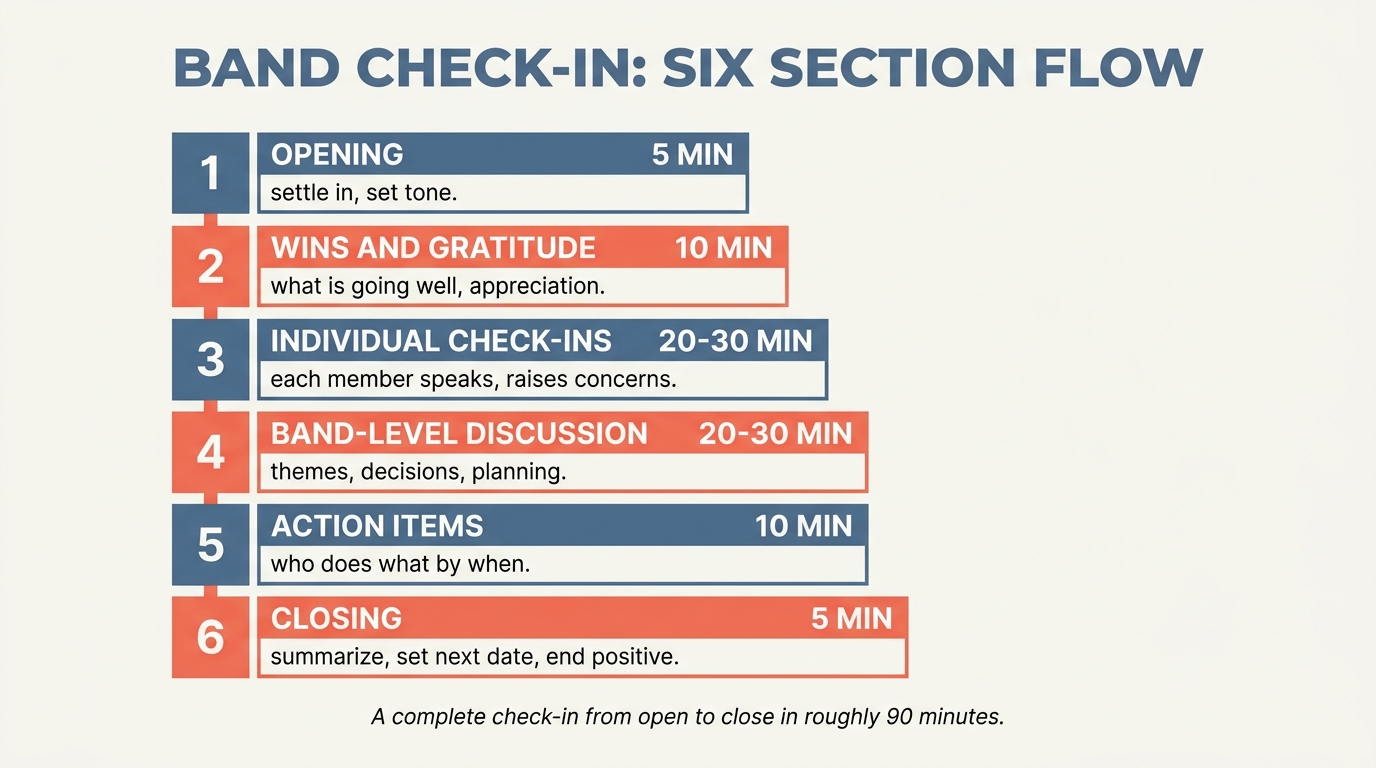
Check-In Section Template
Structured agenda sections—wins, blockers, money/calendar, decisions, owners—for group or one-to-one check-ins.
How to use this guide
Template for regular band check-in meetings. Fill in the next date, facilitator, and topic list ahead of time so the half hour ends in a decisions log, not drift. Use the section template download when you want a fixed agenda skeleton (wins → owners) instead of a free-form topic list.
Book the date and facilitator straight into the shared calendar, collect topics during the week, and log decisions where the whole group can reread them before the following check-in.
Small frictions stack into crises when nobody checks in. Short scheduled check-ins are maintenance, not drama. Templates keep check-ins from becoming unstructured therapy or status theater.
Cadence that works
Monthly hits the sweet spot for most groups, with weekly sessions reserved for genuinely high-stress stretches like a release week or a tour run. Going longer than a quarter without one real conversation lets resentment compound until it disguises itself as a creative difference that was never about music at all.
Treat the meeting like a rehearsal: a fixed slot in the shared group calendar, a room or call link, and an expectation of showing up. Optional conversations simply do not happen during busy months, and the skipped month is always the one where the drummer was quietly job-hunting.
Time box the meeting
Twenty to forty minutes with a hard stop covers the agenda for most groups, and the countdown forces choices instead of drift. When a monthly conversation reliably balloons past two hours, the agenda itself is wrong or the band is dodging a call it needs to make.
Ending at the agreed minute matters even while feelings sit unresolved on the table, so close the meeting and book a separate conflict conversation for whatever remains. Stretching one session to absorb every emotion teaches people that agendas are decorative and calendars merely polite suggestions.
What belongs in check-in versus rehearsal
Feelings, logistics, money surprises, and friction between people belong in the check-in, while song form, arrangements, and setlist arguments belong in rehearsal with a time box. Blending the two means the personal talk eats the practice hour and the song question never gets a real answer.
A simple test keeps the agenda clean: if the issue would still matter with the instruments unplugged, it goes on the check-in list. The bassist's feelings about load-in division qualify; whether the bridge needs four bars or eight emphatically does not, no matter how passionately the guitarist feels about it.
When emotions spike
When someone gets visibly upset mid-meeting, pause the creative agenda and give that interpersonal item a bounded ten minutes so the person can say the whole thing once. Should ten minutes prove too small, name a dedicated slot with just the people involved and a firm end.
A single spike should never vaporize the remaining agenda month after month, because unspoken items pile up and the loudest emotion quietly becomes the band's only prioritization system. Resume the list after the bounded pause, even when the energy in the room feels flat for a while.
Facilitation, artifacts, and refusal
Rotate the chair between members when trust runs high, and pick one steady leader to own the agenda when it does not. The facilitator's real job is balancing airtime and landing decisions, not delivering a monologue with bullet points. Thirty minutes with a written agenda beats ninety minutes of drift.
Get the outcomes and the accountable person for each item into a shared note before anyone sleeps, because a meeting without written artifacts is a vibe rather than a system. Two lines per item suffice: what was agreed, who acts next, and by which day. Remote members receive identical prompts and contribute to that same note; async replies added beforehand count fully.
Someone who persistently refuses every shared process is telling you something about membership, not about calendars. Treat chronic refusal as data for a bigger conversation about whether this lineup still fits, rather than endlessly rescheduling around one person's quiet boycott. Two declined invitations deserve a direct question, not a third invite.
Fill-in: Next check-in
Date: ________
Facilitator: ________
Topics: ________
Decisions log: ________
Fill-in: Template sections (optional structure)
Wins: ________
Blockers: ________
Money/calendar: ________
Decisions: ________
Owners: ________
Putting it into practice
Schedule a 30-minute check-in this month with a written agenda. Use the section template at the next meeting and store outcomes where all can read.
FAQ
How often should a working band run check-ins?
Monthly is enough for most groups; weekly only during high-stress seasons (release, tour, member change). Longer than a quarter without a real conversation is how resentment compounds.
How long should a check-in meeting run?
Twenty to forty minutes with a hard end. If it always runs two hours, the agenda is wrong or decisions are being avoided.
What belongs in a check-in vs a creative rehearsal?
Feelings, logistics, money surprises, and relationship friction belong in check-ins. Song form debates belong in rehearsal with a time box. Mixing both usually does neither well.
Who should facilitate?
Rotate if trust is high; otherwise a designated leader with a neutral agenda. The facilitator’s job is airtime and decisions—not monologue.
What if emotions spike mid-template?
Park creative work, finish the interpersonal item with a time box, and schedule a dedicated conflict session if needed—do not freestyle for an hour.
Do remote members join the same template?
Yes. Async notes beforehand help, but the same sections keep fairness when some people are on video.
How do we store outcomes?
Write decisions and owners in shared notes the same day. A check-in without artifacts is a vibe, not a system.
What if someone refuses check-ins?
That is data. Persistent refusal of shared process is a membership issue, not a calendar problem.