
Conflict Resolution Framework
DOCX download
Conflict Resolution Framework
Free editable Word framework you can copy, fill in, and share with your band. Also readable on this page.
DOCX download
Conflict Mediation Plan
Separate fill-in mediation plan (parties, rules, experiment, follow-up) when a neutral facilitator is needed.
How to use this guide
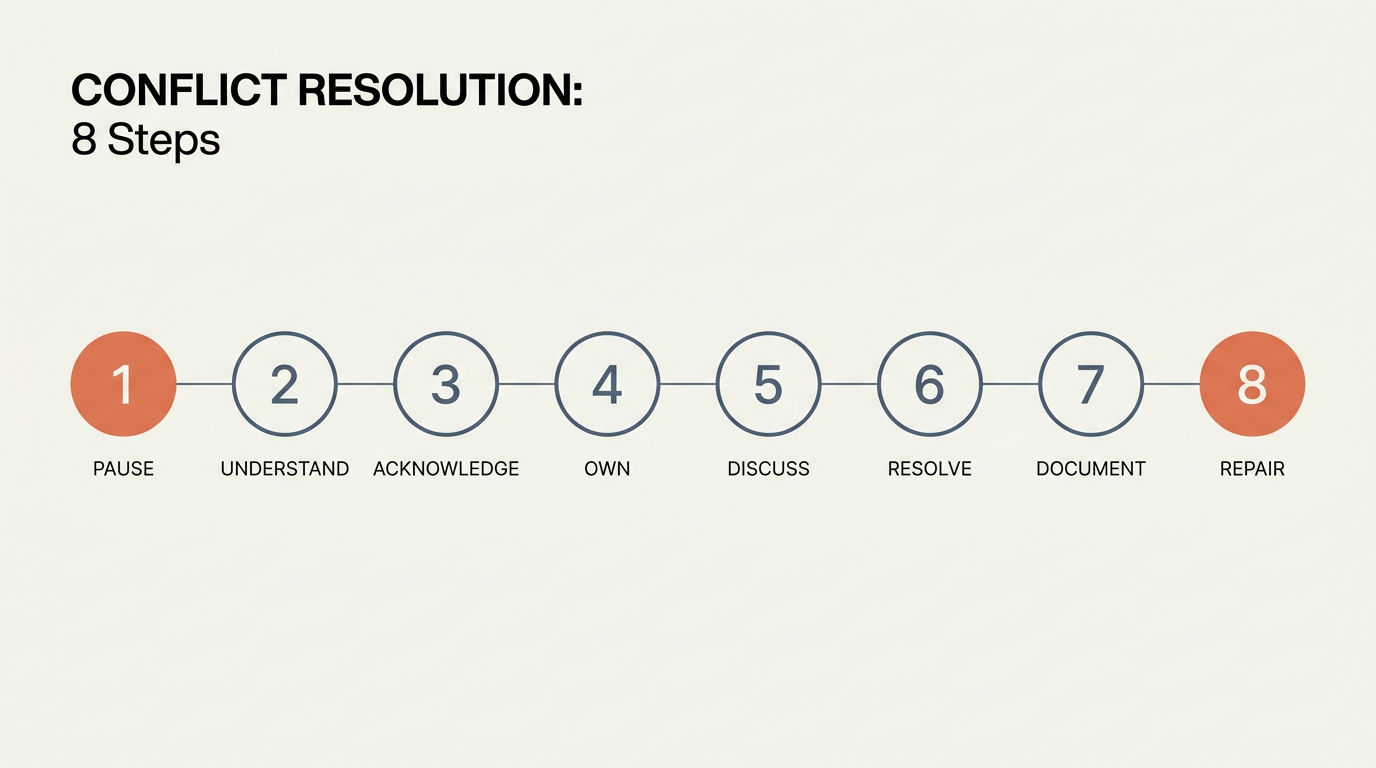
Framework for resolving band conflicts. The goal is a signed resolution agreement: one needed change, one owner, a check-in date, and the consequence if it slips. When two members cannot resolve alone, use the mediation plan download and the mediation section below.
Suggested workflow: fill the Issue and Needed change lines together, let the owner pick the check-in date, and settle the If-not-met consequence before anyone leaves; reopen it on that date only.
Conflict is information under stress. Resolution is not “winning”—it is restoring a workable way to make music together, or deciding you cannot.
Name the problem without character assassination
Open with behavior and impact instead of identity: telling someone they missed three call times and cost the band a venue hold gives them something concrete to answer and repair. Declaring them impossible guarantees defensiveness, since the only moves left are surrender or counterattack, and neither saves next Saturday's load-in.
Close the conversation with what must look different over the coming two weeks, stated as observable behavior anyone could verify from the back of the room. Vague processing that produces insight without new behavior quietly exhausts your most reliable people, who carry the slack while everyone else journals.
A simple resolution path
Begin privately whenever safety allows, because a surprise pile-on in front of the whole lineup freezes honesty for months after the fight itself ends. Establish the shared facts first — what happened, when it happened, and what it cost — before anyone argues about preferences or personality.
From there, generate two or three options together, choose one with a named person and a deadline attached, and put the recheck on the band calendar before anyone leaves the room. Facts, options, choice, recheck: the sequence stays deliberately simple so nobody can plead confusion six weeks later.
When a leader should mediate
Sometimes two members cannot resolve alone. Mediation is structured help—not a court, not a gossip circle, and not a chance for the room to pile on.
Step in as facilitator when a dispute is blocking rehearsals or shows, when power between the two members is badly uneven, or when their direct talks have already failed twice. A load-in argument that has now canceled soundcheck three weeks running has outgrown private territory.
Stay out of the referee chair for any fight you are a primary party to, because bias leaks through interruptions and uneven summaries; a trusted outsider serves everyone better. Either way, open with ground norms: one speaker at a time, no pile-ons, ten-minute boxes, and confidentiality people can genuinely honor.
Restate each person's position back to them until they say you got it right, then dig beneath the stated demand for the actual interest driving it. The bassist who insists on no more weeknight gigs may really be protecting a day job, and positions collide while interests often trade. Close the session by drafting a small trial with a review date rather than a permanent treaty, and read the agreement aloud while everyone is still seated so vague promises cannot slip out of the room. Should the exchange turn threatening or cruel, end things immediately; this work is not therapy or safety planning.
When resolution fails
Persistent contempt, safety problems, or flat denial after two honest rounds means the talking phase has ended, so shift toward boundaries: separate writing sessions, a hired dep covering the next run of gigs, or a respectful exit conversation. Keeping the band functional outranks keeping it intact.
Some fights outlast every fair process, and the honest move is to say so plainly: propose a role change, a separation of duties, or a planned departure conversation. Three facilitated rounds spent on the same jealousy over booking credit is enough data to stop booking more rounds. A facilitator who refuses to name an unworkable pattern becomes part of that pattern.
Endless workshops where nobody owns a single commitment are avoidance wearing a caring costume, and the bill lands on members who still show up prepared every week. A fair process with a real deadline is kinder than letting resentment metastasize through another full festival season.
Fill-in: Resolution agreement
Issue: ________
Needed change: ________
Owner: ________
Check-in date: ________
If not met: ________
Fill-in: Mediation plan (when a facilitator is needed)
Parties: ________
Issue: ________
Rules: ________
Experiment: ________
Follow-up: ________
Putting it into practice
If a live conflict exists, schedule a private conversation this week with a written outcome. If two members are stuck after fair direct talks, offer a mediated 40-minute session with written rules.
FAQ
When should we use this framework instead of "just talking it out"?
Use the structured steps when the issue has repeated, emotions are high, or past freeform talks went in circles. A planned opening, equal airtime, and written next steps prevent the conversation from becoming another rehearsal argument.
What if the other person gets defensive or shuts down mid-conversation?
Pause, name the heat without escalating ("I can see this is hard to hear"), switch to questions about their experience, and take a break if either of you is too activated. Reschedule within a few days rather than abandoning the issue or texting it out.
How do we know the conflict is resolved versus just postponed?
You have a specific agreement both can restate, named owners and dates, and a check-in on the calendar. If the same behavior returns with no review, treat it as unfinished—not "we already talked about it."
When should a band leader mediate instead of letting members resolve it alone?
Mediate when direct talks have failed, the conflict is hurting shows or culture, both parties will participate, and you are not the primary party to the fight. If you are deeply involved, bring in a trusted outsider rather than "mediating" your own side.
Can I mediate if I already have an opinion about who is right?
No—or not as a neutral. Bias shows up as interrupting one person more, summarizing unfairly, or steering toward your preferred fix. Either recuse yourself and find another facilitator, or switch roles: state your stake and use this framework as a participant, not a referee.
How do we make a mediation agreement stick after the room empties?
Write specific commitments for each person, read them aloud, get verbal or signed buy-in, and set one-week and one-month check-ins. Vague promises ("we'll communicate better") fail; behavior + owner + date succeed.
When should we stop two-person resolution and bring in a mediator or exit path?
Escalate when you've tried this process more than once, trust is broken, power is badly imbalanced, or safety is in question. If fit is gone, plan a respectful difficult conversations / departure path. This guide is educational, not legal advice.