
Behavioral Interview Questions
DOCX download
Behavioral Interview Questions
Free editable Word guide you can copy, fill in, and share with your band. Also readable on this page.
How to use this guide
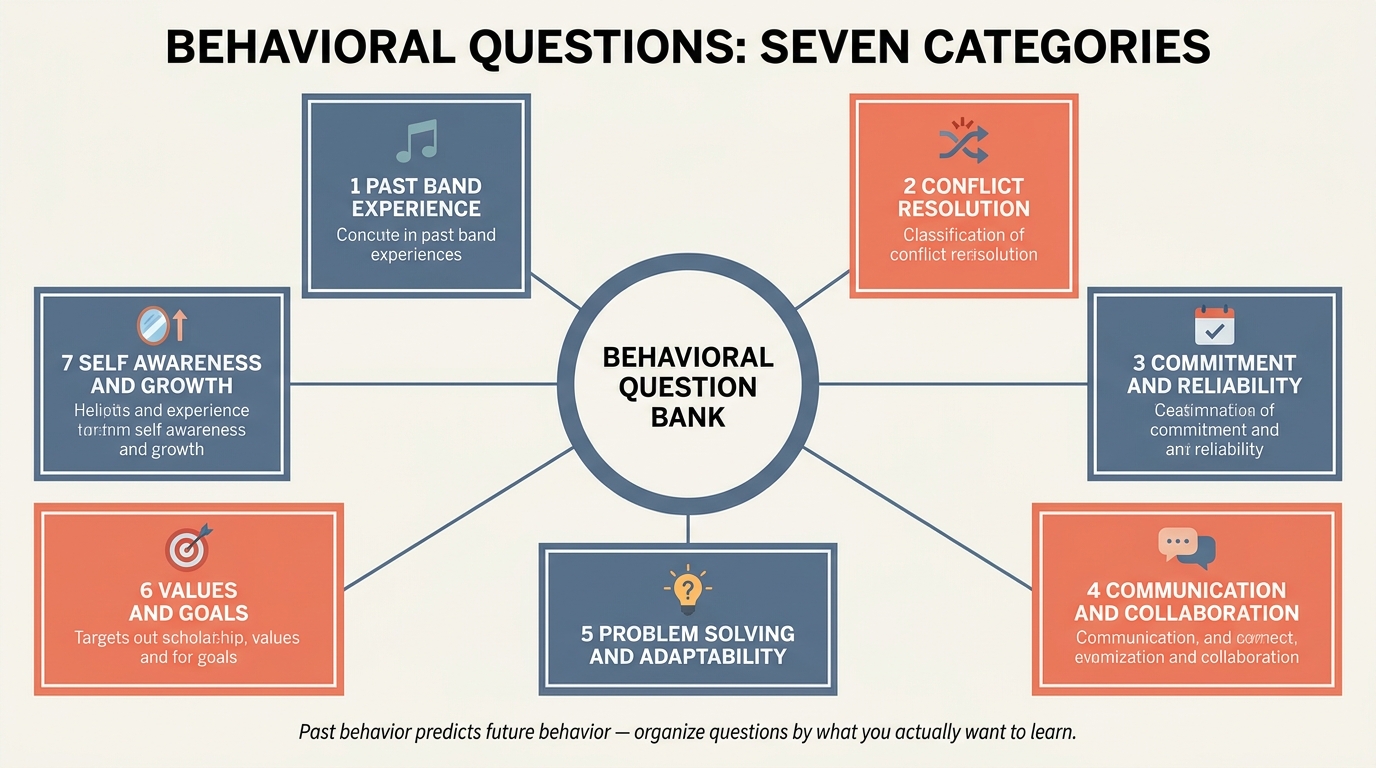
List of behavioral questions for auditions. Settle on the final question set and the deal-breaker answers before the first candidate walks in.
Draft Q1 through Q3 with the whole band, agree on the deal-breaker answers once, then file the sheet with your audition materials and pull it back out whenever a new search opens.
Chops get someone in the room; behavior under stress keeps the band alive. Behavioral questions surface reliability, ego, and conflict habits before a trial wastes months.
Ask for stories, not hypotheticals
Past behavior under real pressure predicts show night far better than polished hypotheticals, so ask each candidate for a specific situation, the action they took, and how it ended. A strong prompt sounds like this: tell me about the gig that went sideways an hour before doors, and what you did first.
After the story lands, ask the follow-up that separates growers from blamers: what would you do differently now. A candidate who names a repair they made after a blowup tends to repeat that repair in your band, while one who only faults the old drummer brings the same script to your next conflict.
Keep the interview short and consistent
Three to five strong prompts after the playing portion is plenty for one evening, because a longer list turns the tryout into a panel interrogation and drains the chemistry you came to feel. Chemistry between songs is the actual evidence you are collecting, so guard it like a take you cannot redo.
Run the identical list for every candidate, and settle beforehand whether prompts go out in advance or stay cold. Sharing calms nerves, cold prompts reveal thinking under pressure, and either mode works — but mixing modes between candidates makes the debrief comparison worthless when the band argues it out later.
Red-flag patterns in answers
A missed note during the audition song tells you almost nothing, but certain reply patterns tell you plenty: stories where everybody else caused the disaster, contempt for every former bandmate, and no memory of ever apologizing to anyone. Those habits walk into your rehearsal room unchanged by the new logo.
Score what you heard within the hour, because after three candidates memory merges them into a single vibe and the sharpest warnings blur together. Two short lines per person — story requested, repair named or not — outweigh a fuzzy group-thread argument reconstructed from impressions days later.
Fill-in: Our interview set
Q1: ________
Q2: ________
Q3: ________
Deal-breaker answers: ________
Putting it into practice
Write three questions tonight and use them at the next audition without improvising a new panel.
FAQ
Why ask behavioral questions instead of hypotheticals?
Past behavior under real constraints predicts show night better than “what would you do if…”. Ask for specific stories with outcomes.
How many questions fit in an audition?
Three to five strong ones after playing. More turns into a panel interrogation and tanks chemistry.
What answers are red flags?
Blame-only stories, contempt for past bandmates without ownership, and inability to name a single repair after conflict.
Should we share questions in advance?
Optional. Sharing reduces anxiety; cold questions reveal thinking under pressure. Pick one mode and apply it to every candidate.