
Creative Constraints Guide
DOCX download
Creative Constraints Guide
Free editable Word guide you can copy, fill in, and share with your band. Also readable on this page.
How to use this guide
Guide for using constraints to enhance creativity. You finish with three named limits, a time box, and a definition of done for the next writing session.
Write the constraints, time box, and definition of done into the shared doc before anyone plays; file the page with your song drafts and start fresh lines for every new writing block.
Infinite options feel free and finish nothing. Constraints create decisions so taste can work inside a frame.
Useful limits
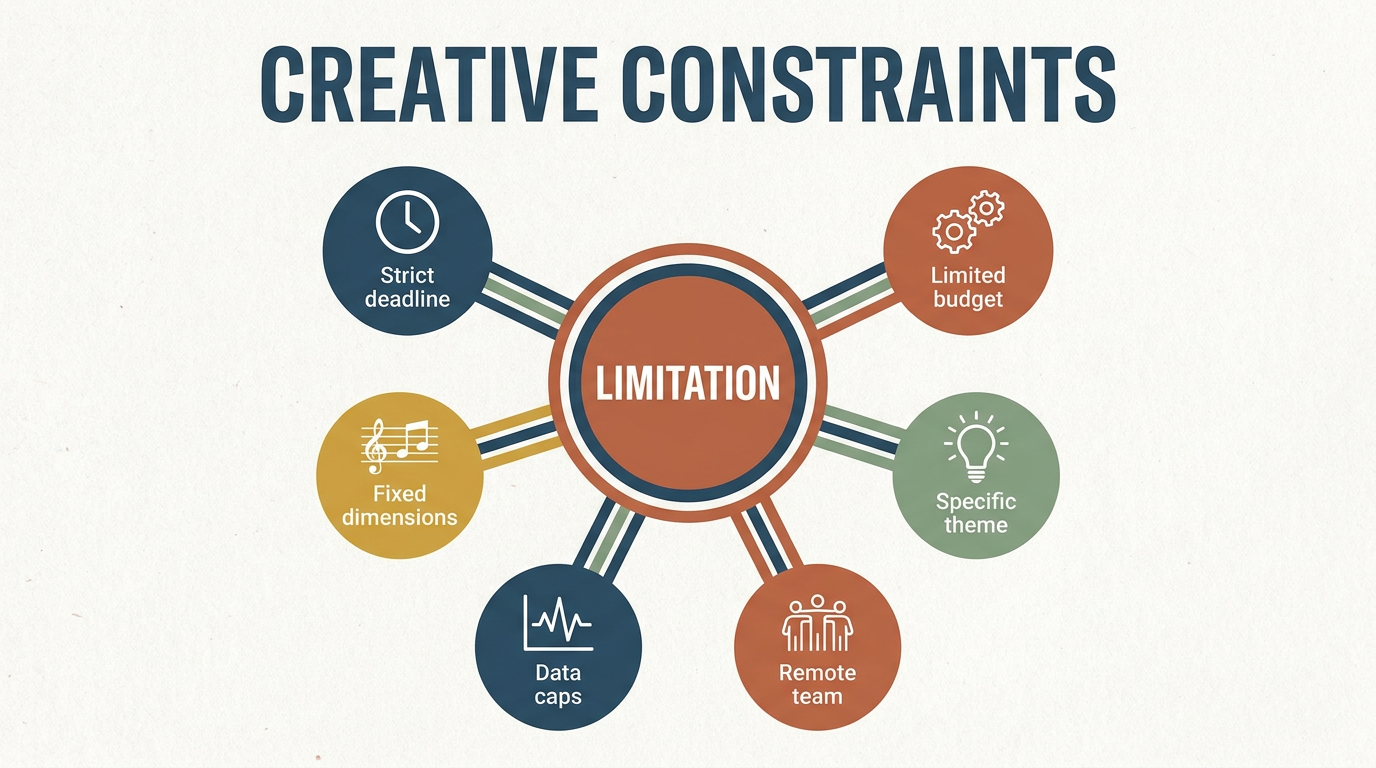
Good limits aim the room at a finishable job for the next few hours, while bad ones merely smother play, so choose them on purpose: one key, one tempo range, a three-minute target length, drums and bass only until the chorus exists. Taste does its best work inside a frame.
Agree on three limits before the block starts and refuse to renegotiate them until a playable draft exists, because rules that shift mid-flow are avoidance dressed up as flexibility. A song sketched in ninety minutes under stated restrictions outperforms the six-hour jam that left twelve voice memos and nothing else.
Who sets constraints
Whoever owns the session announces the frame before anyone plays a note, because rules appearing mid-flow feel like moving goalposts and teach people to hide their half-formed ideas. The announcement itself takes thirty seconds: tonight stays ballad tempo, no guitar solos, chorus melody before anything else gets touched.
Remote collaborators deserve the identical courtesy, so the frame lands in the shared doc or band chat thread before they join the call, never after they have already pitched into a different plan. Surprises breed resentment, while announced rules let people aim their strongest ideas at the actual target.
Lock then revise
Finish a complete draft inside the original frame before anyone revises anything, because permanent open mode is where songs go to die while the group debates hypotheticals. A locked verse-chorus-bridge recording, however rough, gives the revision pass something real to push against instead of fog.
Give the revision pass its own explicit opening, such as a fresh rehearsal where changing key, tempo, or structure finally becomes legitimate and everything is challengeable. Separating the two modes keeps finishing energy and editing energy from canceling each other out during the same exhausting afternoon.
Fill-in: Next writing session
Constraint 1-3: ________
Time box: ________
Definition of done: ________
Putting it into practice
Run one writing session under three stated constraints.
FAQ
What constraints help bands finish songs?
Time boxes, instrumentation limits, key/tempo picks, and “ship a form today” rules. Constraints create decisions.
Do constraints kill creativity?
Bad ones do. Good ones focus attention so taste can work. Professionals use limits constantly.
Who sets constraints for a session?
The session owner announces them up front. Surprise constraints mid-flow breed resentment.
How do we revisit constraints later?
Lock a draft under constraints, then open a revision pass. Endless open mode is where songs go to die.