
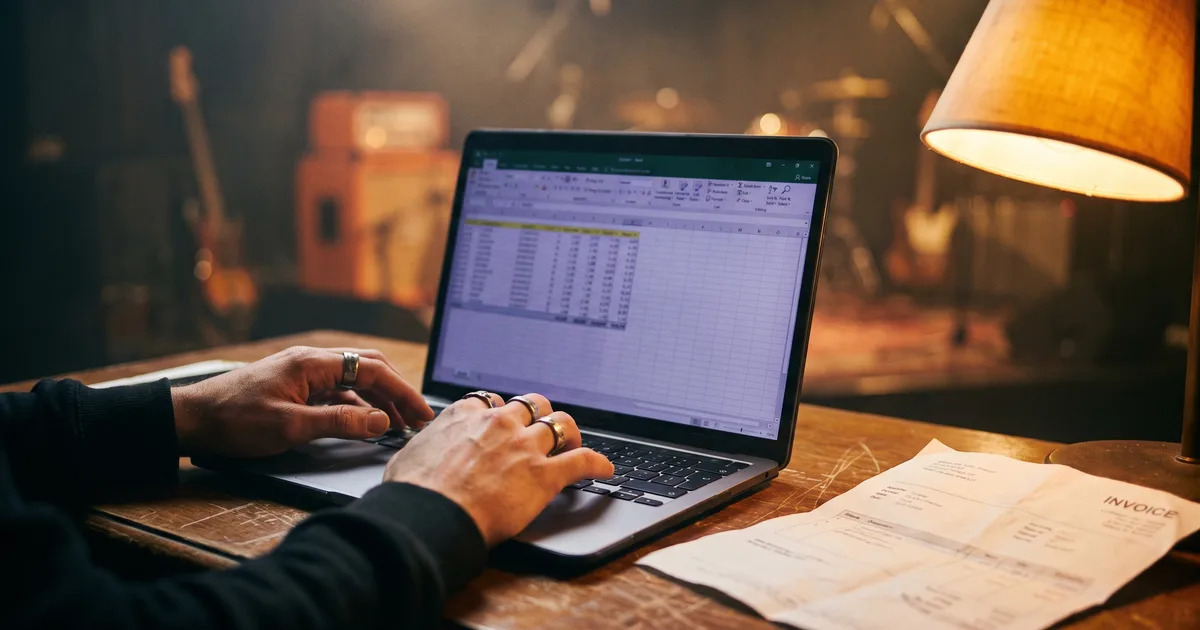
Band Income Tracking: Stop Losing Track of Who Owes You
Bands lose thousands of dollars per year to poor income tracking. Not because the money doesn't exist, but because nobody follows up. The venue says they'll pay within 30 days — 60 days pass, no check, and the band forgot to follow up. The merch table brought in $400 cash — half of it was counted wrong and the rest got spent on dinner. The streaming royalty hit the band account — but nobody knows which platform sent it or which release it's for, so it can't be reconciled.
Bands lose thousands of dollars per year to poor income tracking. Not because the money doesn't exist, but because nobody follows up. The venue says they'll pay within 30 days — 60 days pass, no check, and the band forgot to follow up. The merch table brought in $400 cash — half of it was counted wrong and the rest got spent on dinner. The streaming royalty hit the band account — but nobody knows which platform sent it or which release it's for, so it can't be reconciled.
These aren't exotic failures. They're the everyday income leaks that drain band bank accounts by 10-20% per year. The fix isn't complicated — it's a system that logs every income source the moment it's earned, tracks the expected vs actual payment, and reminds you to follow up when money is late.
Every source of band income should be in your tracker. Gig payments (the venue's guarantee, the door split, the bar percentage — all separate line items). Merch sales (cash on the night, online store sales, wholesale orders). Streaming royalties (DistroKid, TuneCore, CD Baby, label statements). Publishing royalties (PRO statements from ASCAP/BMI/SESAC). Sync fees (music placed in film, TV, ads, games). Sponsorship and partnership payments. Session work and side gigs. Teaching and clinic income. Investment from band members. Anything that comes in goes in the tracker.
The fields that matter for each income event: date earned, date expected to be paid, amount, source, contact (the venue, the platform, the person), status (pending, partial, paid, overdue, written off), and notes. With those six fields, you can answer every question that matters: "How much did we make last quarter?" "Which venues still owe us?" "What's our realistic income forecast for the next three months?"
The follow-up cadence that actually collects the money. Don't wait for income to land — actively chase it. The day after a gig, log the expected payment with the date and amount. If the payment doesn't arrive within 7 days of the expected date, send a polite follow-up. If still nothing after 14 days, escalate to a phone call. If still nothing after 30 days, send a formal written reminder with the original contract attached. Most late-paying venues pay after the second or third nudge. The bands that get paid on time are the bands that follow up consistently.
Cash income from merch tables is the trickiest to track. Best practice: have one person own the merch table for the night. They count the starting float, count the cash at the end, log the inventory sold, and reconcile the totals within 24 hours. Don't let multiple people handle the cash. Don't let merch money mix with personal money. Don't trust anyone else's count — verify it. Bands that don't follow this discipline lose 10-30% of merch revenue to sloppy handling, intentional or not.

Streaming and publishing royalties need a different approach because they arrive on a delay and in unpredictable amounts. The fix is monthly reconciliation: once a month, log every royalty statement, match it to the source (which platform, which release), and post it to the income tracker. Over time, you build a baseline so you can predict quarterly royalty income within 10-15% accuracy. That baseline is what lets bands actually forecast cash flow instead of being surprised.
Don't co-mingle tracking with the band's bank account. Have one source of truth for income tracking — a tool, a spreadsheet, whatever — and reconcile it against the bank account monthly. The reconciliation catches missed income, miscategorized income, and the occasional honest mistake (wrong amount deposited, double-payment, fee deductions). It takes 30 minutes a month and saves you from year-end disasters.
The discipline that separates bands that grow from bands that stagnate isn't talent or hustle — it's that the organized bands actually collect the money they've earned. Bands that consistently follow up on late payments build reputations as professional acts, which leads to better gigs, better payment terms, and longer careers.
Bandmate's income tracking is built for this exact workflow — log expected payments the day after a gig, automated reminders for late ones, monthly reconciliation against your bank account, and clean reports for tax time. Free to try.

Founder of Bandmate ®, entrepreneur, and musician helping bands succeed in the modern music industry.
Band Expense Categories: How to Categorize Band Spending for Cleaner Books
The right expense categories do three things at once: they make tax deductions easy to claim, they make profit-and-loss reports actually meaningful, and they make band splits transparent when band members disagree about what counts as a "band" expense. Most bands skip this setup and end up with one big "stuff" category that tells them nothing. The fix is a category list designed for the way bands actually spend money.
Best Band Management Software: Complete Guide for 2025
Software will not write a chorus or fix a flaky drummer. It will stop the deposit that lived in a text thread, the rehearsal that three people remembered differently, and the “who has the contract PDF?” spiral at midnight before load-in. Bands that still run everything from group chat are competing with bands that treat operations like a small business—without becoming corporate zombies.