

How to Keep Band Finances Organized: A Simple System That Actually Works
Band finances get chaotic fast. Five gigs at three different venues, each paying differently, each paying late, each with its own split agreement with the band. Plus merch sales from the last two shows. Plus the studio invoice from three months ago that's still unpaid. Plus the rehearsal room rental. Plus the van registration. Most bands just stop tracking and hope it works out at tax time. It doesn't.
Band finances get chaotic fast. Five gigs at three different venues, each paying differently, each paying late, each with its own split agreement with the band. Plus merch sales from the last two shows. Plus the studio invoice from three months ago that's still unpaid. Plus the rehearsal room rental. Plus the van registration. Most bands just stop tracking and hope it works out at tax time. It doesn't.
The reason band finances feel overwhelming isn't that there's too much to track — it's that there's no system. Every transaction lives in someone's memory, in a Venmo thread, in a bank statement that nobody reconciles. There's no source of truth, so there's no accountability, so things drift. The fix is a simple, sustainable system that everyone in the band agrees to use. It doesn't need to be fancy. It needs to be consistent.
Three buckets cover everything. Income (gig payments, merch sales, streaming royalties, sponsorships, anything coming in), expenses (rehearsal space, gear, travel, marketing, anything going out), and band account (the shared pool that money flows through before splits). Most bands operate with some informal version of these buckets — they just don't call them that, and they don't track them consistently. The minute you name the buckets and assign someone to maintain them, half the chaos disappears.
The discipline that makes it work: log every transaction within 48 hours. Income, expense, doesn't matter. The longer you wait, the more you forget, and the more you reconstruct from memory (which is always wrong). Logging within 48 hours takes 2 minutes per transaction. Reconstructing six months of forgotten transactions takes a full weekend and produces data you don't trust.
The role that makes it work: every band needs a finance lead. This is the person who owns the books, logs the transactions, chases the late payments, and prepares the splits. It's a small amount of ongoing work — maybe an hour per week — but it has to be one person's job. Bands that try to share finance duties across everyone share nothing and track nothing. Pick the most organized person in the band, give them the role, and compensate them for the time (usually a small percentage of band income or a flat monthly stipend).
The tool that makes it work: anything that lets you log transactions, categorize them, and produce a report. Spreadsheets work for very small bands but break down around 100 transactions per year. Accounting software like Wave or QuickBooks Self-Employed handles the basics but isn't music-specific. Bandmate is built specifically for bands — income and expense tracking, automatic splits, gig payment tracking, and tax-ready reports. The app matters less than the habit, but the right tool removes friction.
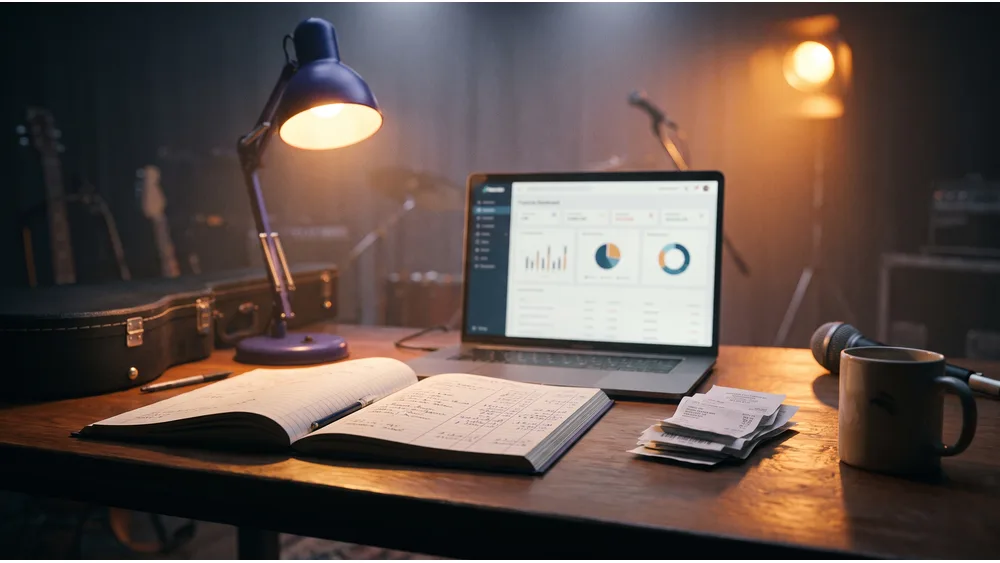
Common mistakes to avoid. Don't mix personal and band money in the same account — open a dedicated band account the day you start playing gigs that pay. Don't wait to record transactions "until things settle down" — they never settle down. Don't pay band members informally before logging the gig payment — log the gross first, then log the splits as outflows. Don't skip the tax conversation — every band owes taxes on net income, and tracking quarterly saves a nightmare in April.
The split conversation is the one most bands avoid. Establish a split agreement before the money shows up — even a simple "everything splits equally after expenses" written down is better than figuring it out when there's $4,000 in the account and four people want different amounts. Document it. Update it when circumstances change. Treat the agreement as a contract the band has with itself.
Quarterly reviews are what separate bands that stay financially healthy from bands that drift into tax debt. Once every three months, the finance lead produces a simple report: income by source, expenses by category, current band account balance, year-to-date net, upcoming tax estimate. One page, one meeting, thirty minutes. Bands that do this consistently never get surprised. Bands that don't are the ones calling their accountant in panic every April.
Bandmate's finance module handles all of this out of the box — track income and expenses, log gig payments, run automatic splits per your agreement, generate tax-ready reports, and review quarterly with built-in dashboards. Free to try.

Founder of Bandmate ®, entrepreneur, and musician helping bands succeed in the modern music industry.
How to Book Your First Gig: Complete Guide for Musicians in 2025
Your first gig will not look like the festival main stage in your head. That is not a failure—that is how almost every band starts. The danger is waiting for a "real" opportunity while you skip the messy, useful first shows that teach you load-in, timing, and how to ask people to show up.
How to Manage Band Contacts: The Practical System That Actually Works
The first time I lost a venue because I couldn't find the booker's number in time, I knew the contact system I was using was broken. It wasn't a tool problem — it was a process problem. I had hundreds of contacts scattered across phone, email, Instagram, text threads, business cards in a shoebox, and a Notes file I'd been copy-pasting into for three years. None of it was searchable, none of it had context, and none of it reminded me to do anything.