
Reference Check Template
DOCX download
Reference Check Template
Free editable Word guide you can copy, fill in, and share with your band. Also readable on this page.
How to use this guide
Template for checking references of potential members. You should end with a completed call log you can compare across candidates side by side.
Suggested workflow: open a fresh log per candidate, record notes live during each call, and keep the filled pages in your private hiring file until the seat is settled.
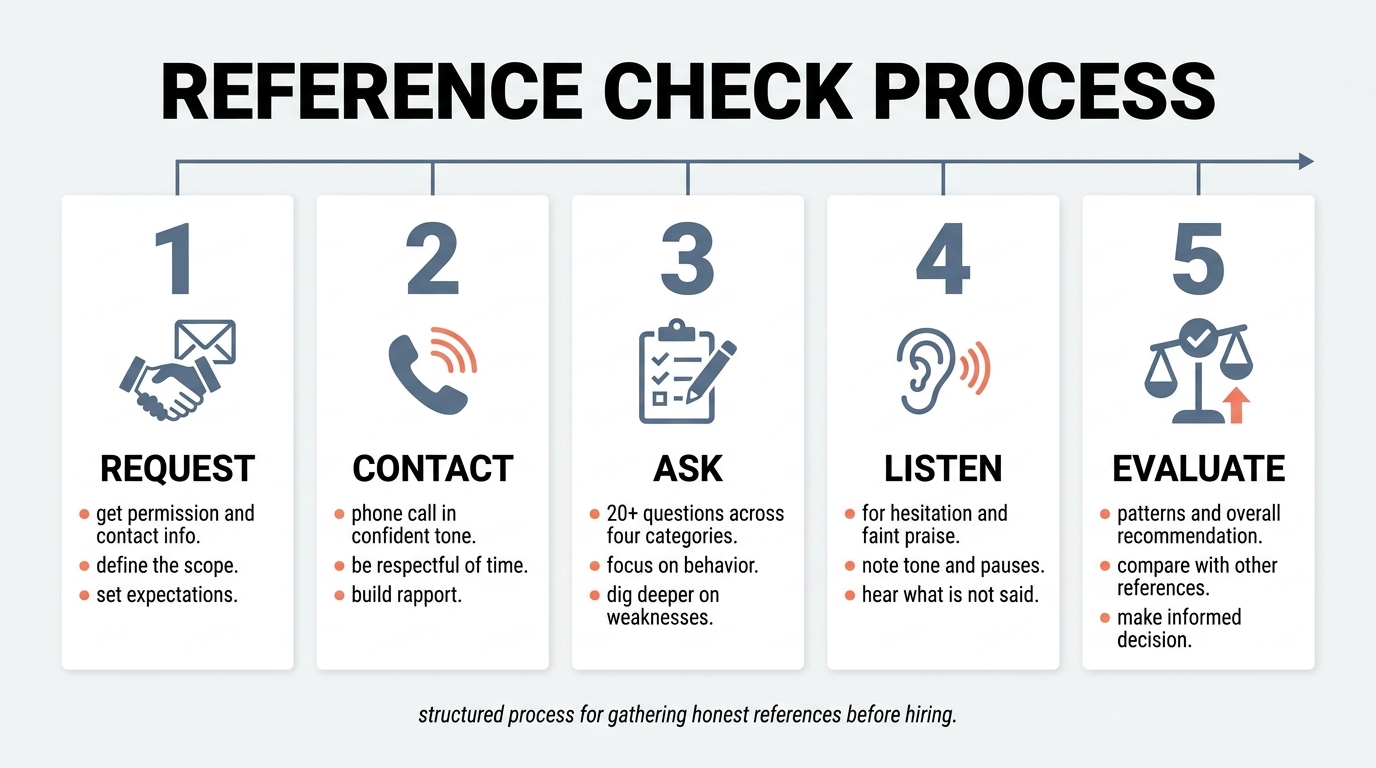
References are where best-behavior auditions meet real history. A short, consistent template keeps calls professional and comparable across candidates.
When to call and whom to call
Timing matters: run your calls after a strong audition but before offering a long trial or a permanent seat, and always with the applicant's consent. Two recent collaborators who actually shared stages and rehearsals outweigh five friendly names who only know the person from parties.
An applicant who cannot produce a single musical collaborator for a musical seat has already told you something worth hearing. Ask why directly; the answer, whether it is a burned bridge or simply a short history, shapes how much weight you put on the remaining calls.
What good calls surface
A useful fifteen-minute conversation uncovers how the person behaved under stress: whether call times were honored, how conflicts got repaired, whether money was handled honestly, and whether this bandmate would share a stage with them again. One concrete growth area, requested politely, separates real knowledge from polite avoidance.
Writing notes during the call, not from memory afterward, preserves the hesitations and careful phrasing that often carry more meaning than any superlative. A long pause before answering the rehire question is data, and it belongs in the log with the date attached.
Weigh patterns, not gossip
A single lukewarm report is a question to explore, while the same hesitation from two independent people is close to a verdict. Keep everything in a private leadership document rather than the scene's group chats, because rumor campaigns have a way of returning at the worst possible moment.
When something serious does surface, verify it carefully and then raise it with the applicant through a fair, direct conversation before deciding. People deserve a chance to explain old conflicts, and bands deserve a process they would be comfortable defending if the story ever got around town.
Fill-in: Reference log
Candidate: ________
Reference name/role: ________
Reliability notes: ________
Would rehire?: ________
Concerns: ________
Putting it into practice
Call two references for your top candidate before offering a permanent seat.
FAQ
When in the hiring process should we run reference checks?
After you are seriously interested and before you commit—typically after the final audition or trial rehearsal, not on day one of applications. Asking too early wastes references' time; asking never is how charming auditions become months of no-shows.
What if a candidate will only give family, friends, or a teacher—not previous bandmates?
Treat that as a signal. Prior bandmates and leaders are the gold standard for reliability and fit. If musical collaborators are unavailable, dig harder in behavioral interviews and a paid trial, and use the red flags checklist aggressively.
How much weight should one lukewarm or bad reference carry?
One mild concern can mean context; repeated hesitation, "would not work with them again," or a story that contradicts the candidate's version is a pattern. Prefer multiple sources: if two independent people pause on the same reliability or conflict theme, believe the pattern over the candidate's spin.
Are these questions legal advice for hiring musicians?
No. This is a practical hiring aid for bands, not employment-law counsel. Avoid discriminatory topics (protected classes, medical speculation, etc.) and consult a qualified professional in your jurisdiction if you run a formal business, payroll, or agency. Educational templates do not replace local law.