
Rehearsal Planning Template
DOCX download
Rehearsal Planning Template
Free editable Word guide you can copy, fill in, and share with your band. Also readable on this page.
How to use this guide
Template for planning effective rehearsals. Come away with two weeks of labeled nights pointed at a real date on the calendar.
Sketch this two-week plan backward from the target show, naming each night’s type and goal plus the risk songs, then update it after every session instead of once a season.
Planning a rehearsal cycle is how you stop hoping the set improves by magic. Plans connect goals to calendar blocks and reveal whether you have enough nights before a real date.
Plan backward from the show
Start from the confirmed gig date and count backward, budgeting nights for transitions and stamina rather than just a song count. A forty-minute set with four players usually needs at least one full run-through with no stops, and that run is not optional when the room matters to you.
Every hold on the shared calendar should carry a label like learning, arranging, full run, or troubleshooting, because a block that just says practice invites an hour of noodling. The label tells people what to prepare and which gear to load before anyone plugs in.
Capacity is a constraint
Day jobs, kids, and the singer’s monthly work trip all eat into the calendar, so collect everyone’s blackout dates before sketching the cycle. Three nights the whole band can actually attend beat six fantasy nights that quietly collapse into duos and rescheduling threads.
When the schedule demands more evenings than the members can give, that is a design flaw in the schedule rather than a character flaw in the members. Cut songs from the debut set, push the date, or move some work to shared recordings instead of lecturing people about commitment.
Review weekly
Ten minutes after each session, compare what the night produced against what the calendar promised, then rewrite the coming week while the memory is fresh. A document that never changes stops getting opened, and within a month the band is back to guessing in the group chat.
A cycle that absorbs reality earns trust fast: the bassist stops booking conflicting lessons because the posted nights reliably happen, and homework gets done because it is referenced. Updating the plan is not admitting failure; it is how the plan stays load-bearing through a busy autumn.
Fill-in: Two-week plan
Target show/date: ________
Rehearsal 1 type/goal: ________
Rehearsal 2 type/goal: ________
Risk songs: ________
Show-sim date: ________
Putting it into practice
Map the next two weeks of rehearsals to a real target date today.
FAQ
How far in advance should we plan rehearsals?
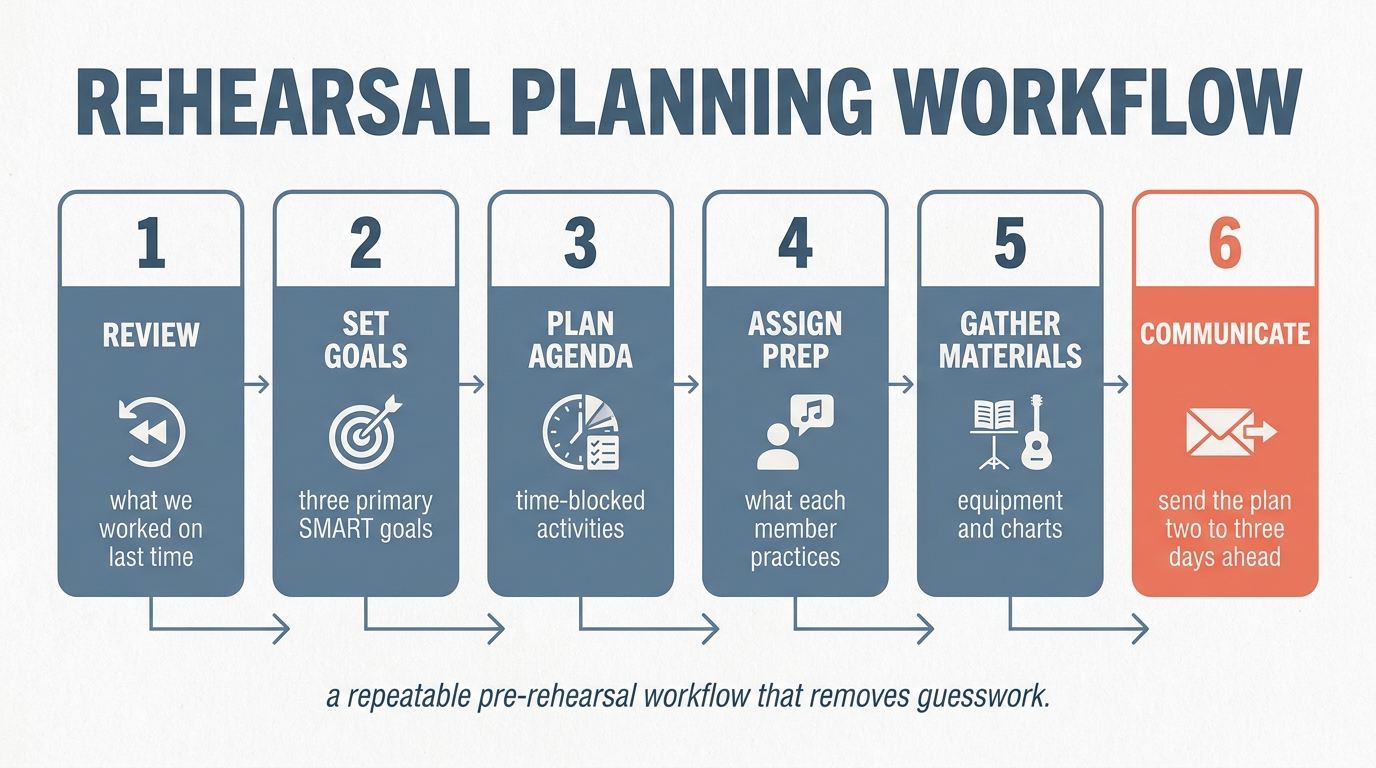
Lock date, place, and high-level goals about a week out; send a detailed agenda 2–3 days before so people can practice. Day-of “we’ll figure it out” is how bands burn rent money on setup chatter.
What is the difference between rehearsal planning and an agenda?
Planning is the pre-work: goals, prep assignments, materials, and communication. The agenda is the timed run sheet in the room. You need both—plan decides what and who prepares; agenda controls when and how long.
How should planning change by rehearsal type?
Learning new material needs section breakdowns and homework; polish sessions drill weak spots; pre-show runs favor full setlist with minimal stops; writing sessions need capture tools and looser blocks. Match time allocation to the type—see rehearsal types.
Should every member get prep homework?
Yes for anything that should not be learned from zero in the room: parts, chart review, click practice, or gear. Shared prep plus individual tasks keeps the expensive hours for ensemble problems only—preparation accountability.