
Financial Agreement Template
DOCX download
Financial Agreement Template
Free editable Word guide you can copy, fill in, and share with your band. Also readable on this page.
How to use this guide
Template for band financial agreements. Work the money questions in sequence and finish with a signed page covering splits, spending approval, and member exits.
Draft the split model, approval threshold, and exit rule before a paid gig lands, file the signed page with the band books, and reopen it after any lineup change.
Money fights disguise themselves as creative fights. A financial agreement makes splits, expenses, and debts boring—so music can stay interesting.
What belongs in a money agreement
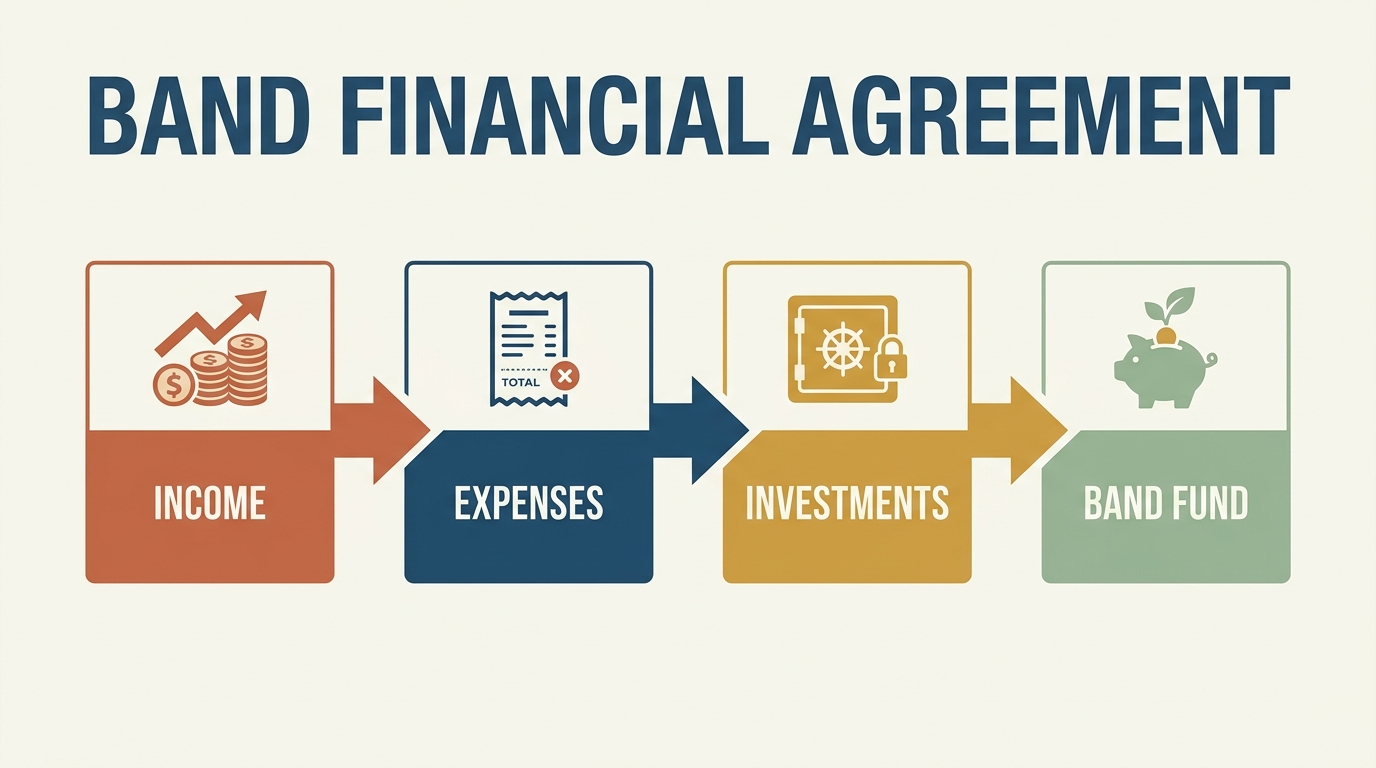
Cover five things in writing: how gig pay divides, who approves purchases, who can touch the bank account, how merch and streaming income flow, and what a departing member still owes or is owed. Add a line for unpaid invoices and members who skip shows, because those two situations detonate otherwise calm bands.
Writing “equal split” without defining equal of what is unfinished work. Equal shares of the door after fuel and the sound engineer differs wildly from equal shares of gross revenue, so run the arithmetic on a real four-hundred-dollar bar night together before anyone signs the page.
Floors, not fantasies
Price every booking from a cost floor: fuel, food on the road, a sub fund, gear wear, and a modest value for everyone's hours. If the floor for a two-hour drive gig is six hundred fifty and you keep accepting three hundred, silent underpricing will compound for years until someone quits bitter.
Private events and club door deals are different products with different math, so say which model applies before quoting a number. A wedding that needs a three-hour set, MC duties, and a PA rental should never be priced off last month's twenty-minute slot at the dive bar.
Transparency without chaos
Give every member read access to the balance sheet even if only two people hold admin rights, because hidden balances breed conspiracy theories faster than actual theft does. Open the books for ten minutes each month, walk through income and outflows, and let anyone question any line.
When the stakes grow past gig money — a van loan, a five-figure guarantee, publishing splits on a sync placement — pause and pay for qualified advice. A friendly one-page document handles Friday-night cash fine; it was never built to carry career-sized downside on its own.
Fill-in: Money rules we agree
Split model: ________
Expense approval threshold: ________
Who pays what fixed costs: ________
Exit repayment rule: ________
Review cadence: ________
Putting it into practice
Write money rules before the next paid gig and reconcile last month’s actuals in the same meeting.
FAQ
When do we need a financial agreement separate from a full band agreement?
When money rules need more detail than a short income section—different splits by income type, expense approval tiers, a band fund, missed-show pay, or buyouts after investments. Use the band agreement template for ownership and governance; use this for how cash actually moves.
Should gig money always split equally?
Equal split is the simplest default and works for many groups. Weighted or role-based splits are fine when the band agrees upfront (for example, a booker premium or gear owner share)—document the reason so it does not feel arbitrary later.
How should we handle a member who misses a paid show?
Decide before it happens: whether a sub takes the full share, the missing member gets nothing or partial pay, and whether no-notice emergencies differ from planned absences. Write that policy once; apply it the same way every time.
How often should we review financial terms?
At least yearly, plus when someone joins or leaves, income mix changes (merch, streaming, sync), or you take on a large shared cost. Pair reviews with open books—manage band finances and a band budget template.